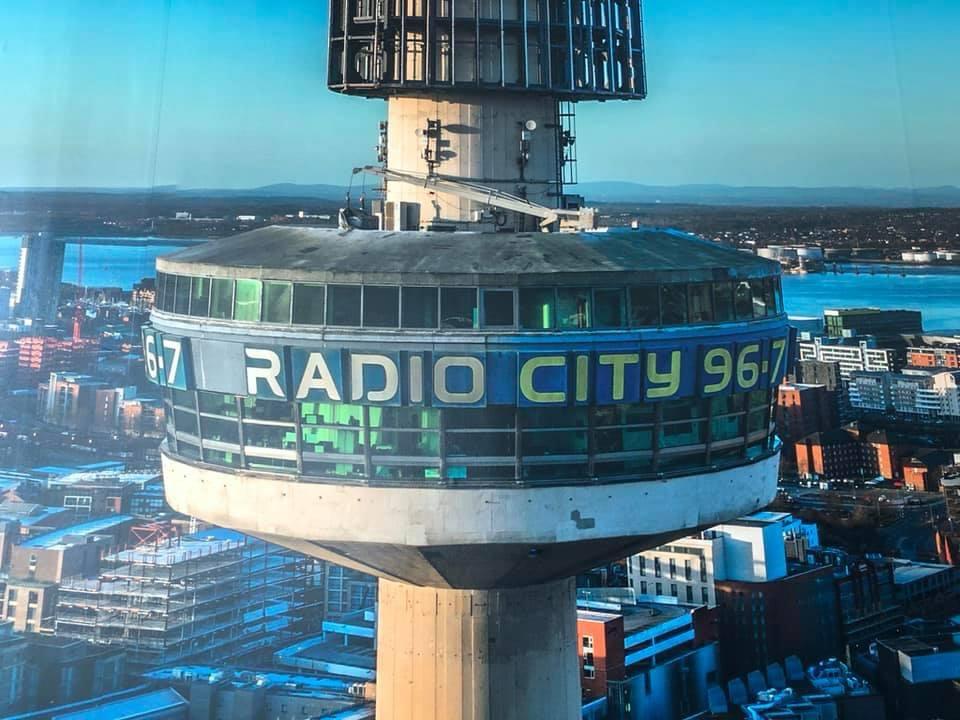
After managing Rock FM, I was offered the chance to run the famous Radio City in Liverpool, one of the original commercial stations with a great heritage.
Spotting an Opportunity
Driving down from Preston, the first building you saw in Liverpool was the 450ft St John’s Beacon, which dominated the city centre. My first thought was that it would make a great poster site for the station, so I decided to find out more. The Beacon had been a revolving restaurant which had lain empty for 18 years following a fire. It had become an embarrassment and seemed to represent the decline of Liverpool at that time.
The Station’s Dilemma
City’s lease on a rather anonymous building in Stanley St was due for renewal. The plan was to move the station to the Albert Dock. This was both expensive and had no parking. Worst of all, you couldn’t put up any decent branding as the Albert Dock was grade one listed. The Albert Dock is famous, but City would have ended up as just one of many tenants.
Making the Deal
Luckily for me, EMAP had a brilliant property manager who immediately entered into negotiations with Land Securities, who owned the St John’s shopping centre and the Beacon above. He managed to do a remarkable deal. The landlords agreed to invest £3 million to update the building and build an extra deck, all for £50k rent and to include 20 car spaces. It was a stunning opportunity, bought into immediately by my bosses.
The Radio City Tower is Born
We put massive illuminated Radio City branding all around the building and in 2000, after a fantastic renovation project masterminded by Phil Tottey, the Radio City Tower was born. This all coincided with the renaissance of Liverpool and generated a feel-good factor throughout the city. The new building had stunning views, great facilities, and the latest kit. Everyone wanted to visit and we soon started running station tours as an additional source of revenue. Better still, you could see Radio City wherever you were in Liverpool. I spent many a happy hour just staring up at my creation. The only downsides were that it made it very difficult to leave and the tower would wobble a bit in high winds.
The Lesson Learned
The moral of the story is that it doesn’t cost more to have a building in a high-traffic (not retail) area than it does in an industrial estate. Provided it’s not listed, you can also be very creative with branding, especially with new technology.