Mistakes happen when you play a game without understanding the rules
After Fox, I was inundated with job offers. I had to leave because I needed to get equity wherever I went, as you can’t make money out of salary alone, and the Fox shareholders weren’t willing to give up any of the action. The first moral of this story is – don’t move just for money!
When I got the call from the winning Scottish regional shareholders, Border and Grampian TV, offering a decent salary and 5% equity, I leaped at it. Not only that, but it was in Scotland the land of my fathers etc, as I had always been keen to explore my roots. When I excitedly told my parents I was coming home, they said, and I quote, “you must be mad, they’ll eat you alive up here”, and so they did!
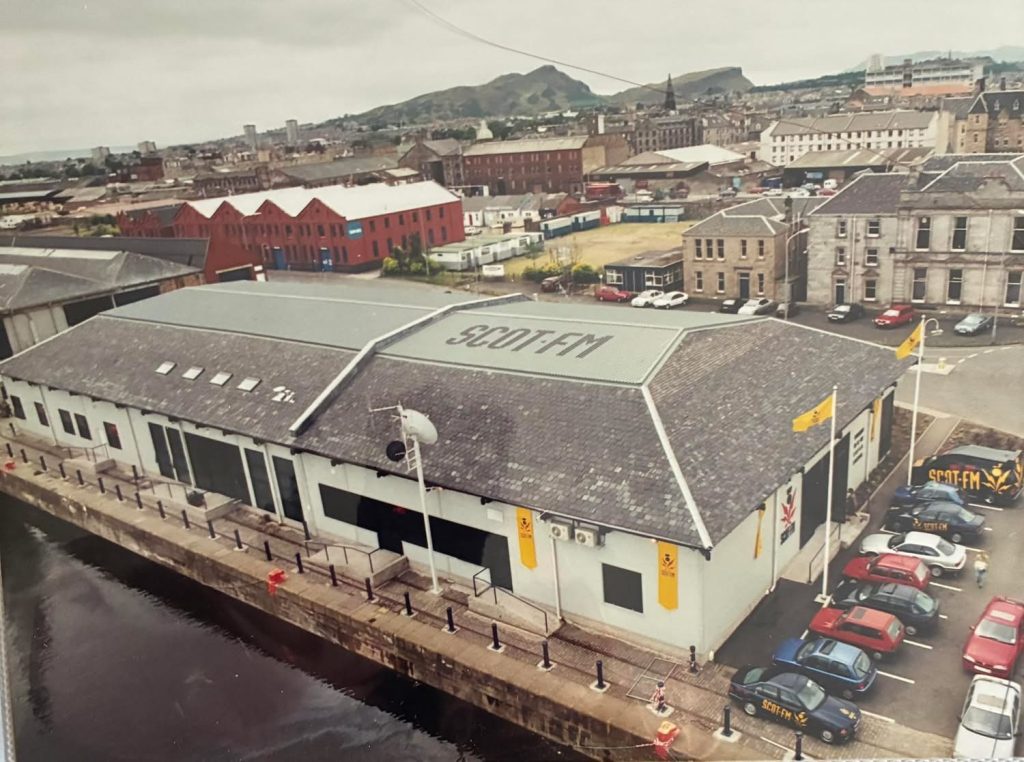
Having mainly worked at heritage pop stations, I didn’t really understand the new formats and their limitations. I thought the proposed Scot FM, (the name I gave it), format looked a bit weird. Contemporary adult music interspersed with lots of speech, including segments called “the wee small hours” and “through till tea”.
Not to mind I’ll call my mate John Myers, who was just launching the Century regional station in the North East. “Don’t worry team”, said John, (he called everyone team), “you can change everything before you launch”. And so he did. He turned his station into a version of the highly successful Red Rose Gold on FM, with his brilliant self on Breakfast. He got away with it because the local heritage stations owned by EMAP let him.
Not so in Scotland, where all the stations were owned by Scottish Radio Holdings, run by the formidable Jimmy Gordon. They weren’t going to let me get away with anything and in the end I couldn’t change a word of our promise of performance, and we were stuck with trying to make it work in its original very strange format. Then, we arguably made our first mistake by locating the new station in Leith near Edinburgh, rather than the main commercial City Glasgow. This we rectified to some extent, by building a studio and sales office in the Daily Record building in Glasgow.
Initially, I managed to secure a brilliant sales leader, in the form of Cameron Pirie; and a programme director, both from Radio Forth. Unfortunately, my programme guy had only worked on pop stations, and had as little understanding of the new format as I did, and left for personal reasons a few months before launch. This left me with a dilemma, what to do?
In hindsight, I should have copied the similar format of market leading Dublin station 104FM, which was doing great despite being in a very competitive environment. Hiring someone from Dublin even as a consultant could have worked well. Main lesson from this is to copy and paste successful stations from elsewhere rather than trying to invent something new.
Time was running out, and I had to come up with something, (me a sales guy!). So, I decided to go the celebrity route!
I should explain that Scotland is a village and the chattering classes all know each other. They are also very protective of their market and resent outsiders getting any of the very limited big jobs in media. To make it worse, I was always described as an Anglo-Scot – basically someone who thought they were Scottish but weren’t really despite both my parents being Scots. This was compounded by the fact that other Scottish national media had a very limited amount of big stories to write about, (before the big independence debate and the rise of the SNP).
Scot was a big story and our every move was followed every inch of the way with massive coverage. It was also made very personal with organisations being described as Jimmy Gordons Clyde and Tom Hunters Scot FM etc.
At first, I thought this was great, and was delighted to give everyone interviews as no one had taken much interest in England. My main theme was how great Scot FM was going to be. Talk about setting yourself up for failure, especially as you were going to be a competitor.
The celebrity route has advantages and disadvantages. The main advantage is that they are well known from the off and we managed to recruit Donnie Munro (Runrig), Kaye Adams (STV), Bruce Finlay (Simple Minds manager), and the formidable Margo McDonald (politician). These were backed up by experienced radio folk such as Chris Mann, Robin Galloway, Gerry Burke and Brian Ford. The disadvantage was that nearly everybody who was anybody applied, and the many unsuccessful ones weren’t exactly fans from then on. We were then joined by the talented and fearless Jason Bryant from Talk Radio in London who set about making the station as professional as possible.
We worked really hard under an intense spotlight to make the station a success. This involved a number of painful changes, each one of which was a big story. We should have been more relaxed and let things run a bit as the value of a station is in its licence and not its audience figures.
Our first results came in at around 10% reach, which I thought was very disappointing as I had been used to numbers around 40%. I only found out later that the Radio Authority had planned the format to reach 10%, as it had such a large transmission area and was designed not to compete too much with the local heritage stations. I had been playing the wrong game all along and we were in the predicted ball park for this new format.
Our big moment came when Scottie McClue arrived to replace Margo on the evening phone in. His uniquely funny approach generated tens of thousands of calls every night and he became one of the most famous people in Scotland.
Commercially, we were successful from day one, under the inspired leadership of Cameron Pirie. He negotiated a fully sponsored takeover of Scottish Football rights from Radio Clyde, making Scot FM the go-to destination for Scotlands national sport. Our advertising from Smarts was also exceptional, with their “Scot the lot” campaign. Another lesson from this period was the introduction of brand new digital playout kit. This became a problem during launch, when the system froze during the prerecorded launch sequence in front of hundreds of guests and the Proclaimers. We told him not to touch the button, he touched the button! Never be the first to use new technology.
Scot went on to win Scottish station of the year and became one of the most lucrative commercial radio licences in history. Costing less than £1 million to launch within 5 years the licence changed hands for £26 million.